How to Price Antiques for Estate Sales: A Clear Guide
Learn how to price antiques for estate sales with research, condition checks, and smart markdowns. Get a free consultation in Shelby County, AL.
Knowing how to price antiques for estate sales is the difference between a sale that honors a family's belongings and one that leaves money on the table. Pricing too high keeps items from selling. Pricing too low gives away real value. This guide walks through a practical, research-based approach.
Quick answer: To price antiques for estate sales, identify the item, grade its condition, check what similar pieces actually sold for, then set a fair price and plan markdowns. Rare or high-value items deserve a professional appraisal first.
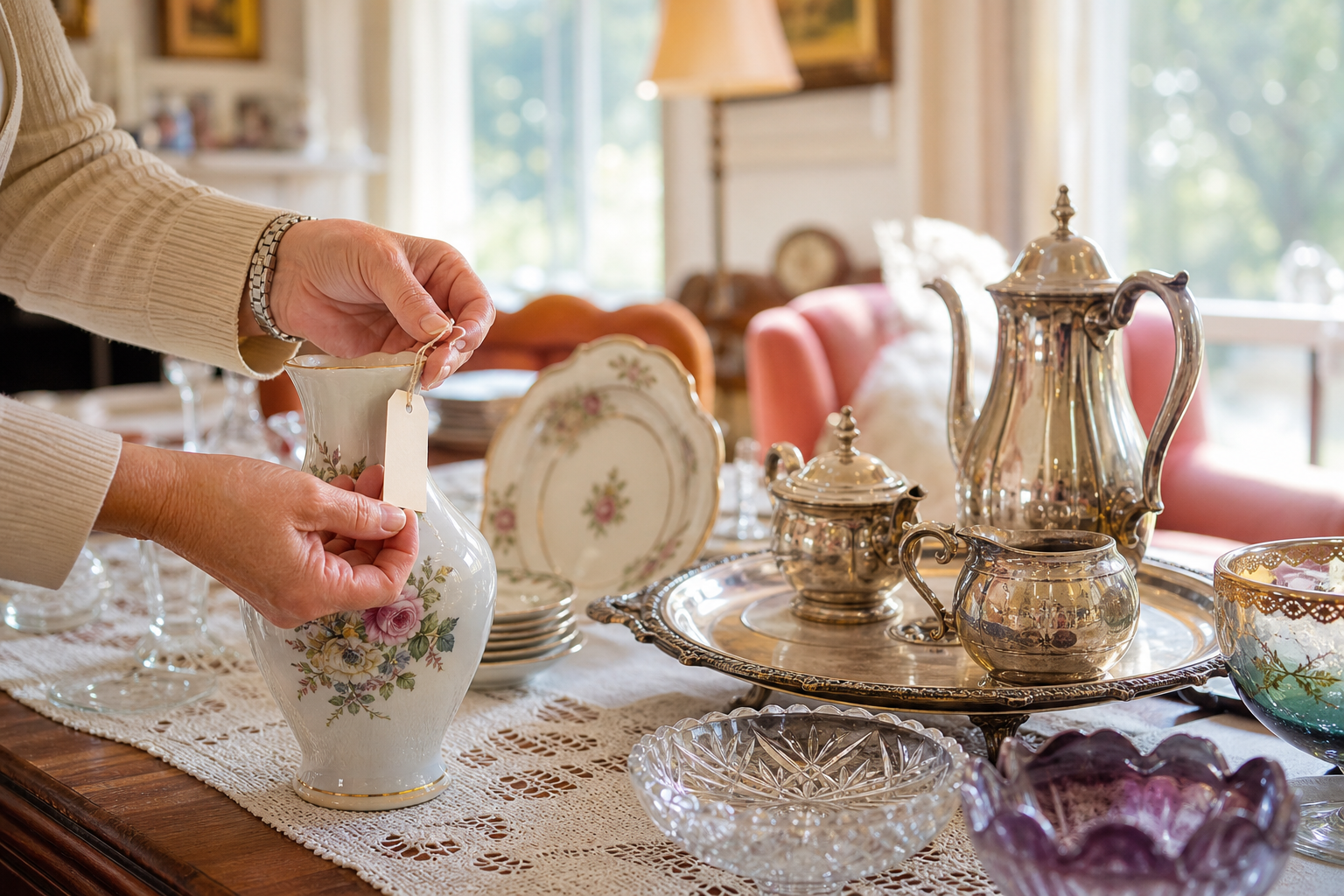
Careful tagging starts with careful research when you price antiques for estate sales.
What Is Antique Pricing at an Estate Sale?
Antique pricing at an estate sale is the process of setting a fair, sellable price on older items based on identity, condition, rarity, and recent sales of comparable pieces. The goal is a price that reflects real market value while still attracting buyers during a short sale window.
Antiques are generally items at least 100 years old. Younger items are often called vintage. If you are unsure which applies, see this explainer on the difference between vintage and antique.
Step-by-Step: How to Price Antiques for Estate Sales
Follow this process for each item. It keeps your pricing consistent and defensible.
- Identify the item. Check the bottom, back, and inside for marks, labels, and signatures.
- Grade the condition. Note chips, cracks, repairs, replaced parts, and finish.
- Research sold comparables. Look at completed sales, not hopeful asking prices.
- Set a fair market price. Adjust within the comparable range for condition and local demand.
- Tag and display clearly. Group like items so shoppers see value quickly.
- Plan scheduled markdowns. Decide in advance when prices will drop.
Identify and Research Each Piece
Look for Marks and Maker Details
Marks often reveal the maker, origin, and era. Porcelain may carry a stamp, silver is usually hallmarked, and furniture can show dovetail joints or maker labels. As a result, a few minutes of inspection can change an item's price tier entirely.
Use Sold Prices, Not Asking Prices
Asking prices show what sellers hope for. Sold prices show what buyers paid. Therefore, search auction results and completed marketplace listings. For background on the broader process, read this guide to how estate liquidation works.
Judge Condition and Rarity
Condition is a major driver of value. Original finish, complete sets, and intact parts raise prices. In contrast, repairs, refinishing, and missing pieces usually lower them.
| Factor | Tends to raise price | Tends to lower price |
|---|---|---|
| Condition | Original finish, no damage | Chips, cracks, repairs |
| Completeness | Full set, original box | Missing parts |
| Rarity | Limited production, known maker | Mass-produced, common |
| Demand | Active collector interest | Fading trends |
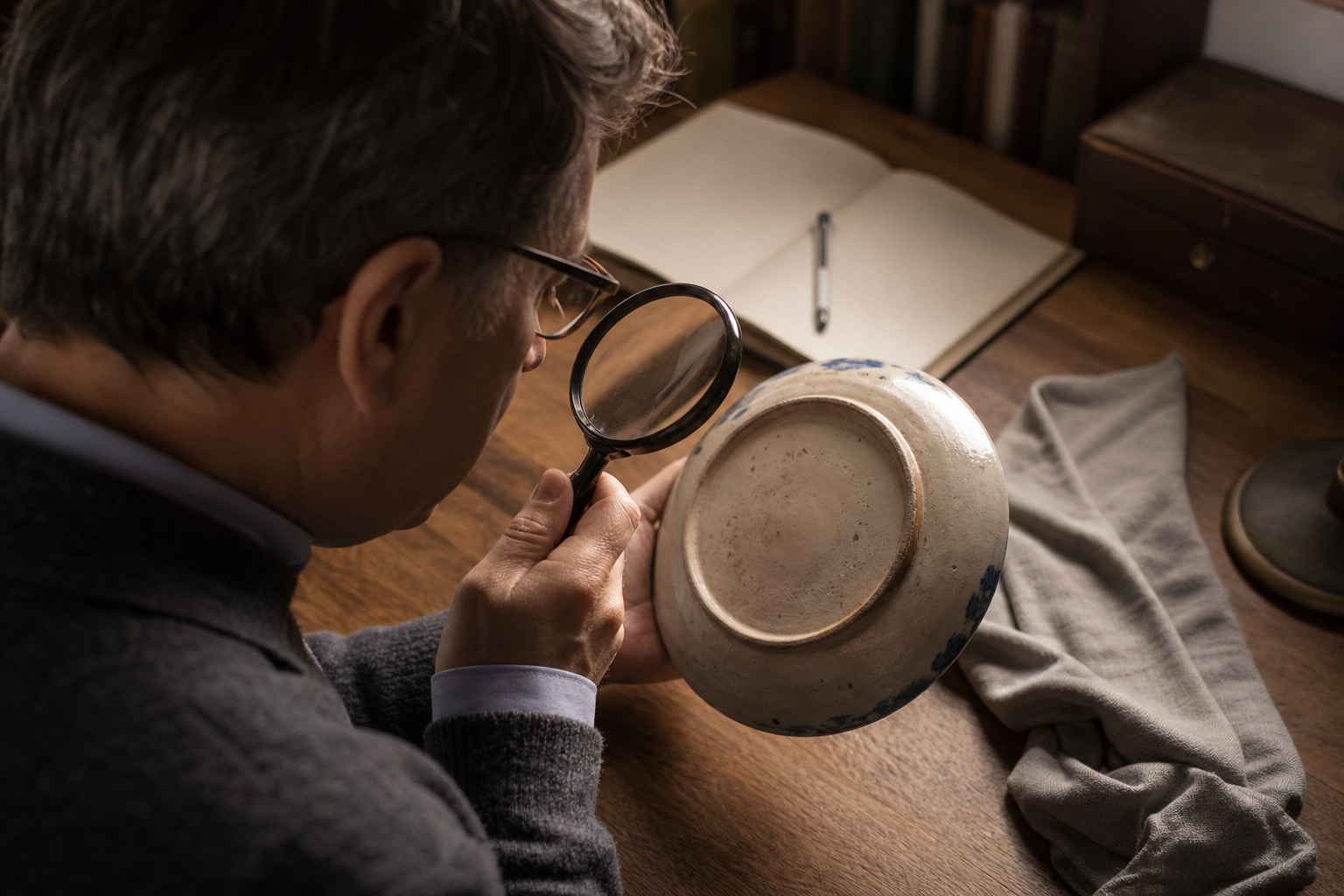
Inspecting marks and condition is the foundation of accurate antique pricing.
When to Get an Antiques Appraisal
Some pieces deserve expert eyes. Signed art, fine silver, early furniture, and unusual collections can be worth far more than they appear. In addition, an appraisal estimates value for a stated purpose, while a sale price is simply what you set to sell. Organizations such as the American Society of Appraisers can help you understand professional standards.
Set a Fair Price and Plan Markdowns
Estate sales run for a short time, so pricing must balance value and speed. Many sales price items to move, then discount on the final day. Consequently, a clear markdown schedule helps remaining pieces find new homes. Shoppers who know what to look for can also spot bargains, as covered in how to find gems at estate sales.
Common Pricing Mistakes to Avoid
- Pricing by sentiment instead of market evidence.
- Relying on asking prices rather than sold prices.
- Ignoring condition problems or repairs.
- Discarding items before checking whether they have value.
- Skipping a markdown plan.
Professional Help in Shelby County, AL
Pricing a full household takes time, and families are often managing a difficult transition. Southern Charm Estate Treasures provides full-service estate sales in Shelby County, AL, including organizing, staging, appraisal, pricing, marketing, and selling. The team has over 20 years of experience in antiques and collectibles and researches each item for fair market value. Explore the full list of estate sale services, or call 205-894-0907 to request a free consultation.
Frequently Asked Questions
What is the first step in how to price antiques for estate sales?
Start by identifying the item. Look for maker's marks, signatures, and labels so you know what you have before researching value.
How do I know if something is truly an antique?
Items are commonly called antiques when they are at least 100 years old. Younger pieces are usually called vintage or collectible.
Should I price items by asking prices or sold prices?
Use sold prices. Asking prices show what sellers hope for, while completed sales show what buyers actually paid.
How much does condition affect antique value?
Condition can change value dramatically. Chips, repairs, refinishing, and missing parts often lower the price, while original finish and complete sets raise it.
What percentage of retail value do estate sale items usually sell for?
There is no single rule. Many sales price below full retail so items move, but rare pieces in strong demand may be priced near market value.
Should I get an appraisal before pricing?
For high-value or unusual items, yes. A professional appraisal helps you avoid underpricing something valuable.
What is the difference between appraised value and sale price?
An appraisal estimates value for a stated purpose, such as insurance. A sale price is what you set to attract a buyer at the sale.
How should I handle markdowns?
Plan them ahead of time. Many sales discount on the last day so remaining items sell instead of being carried out.
What are common pricing mistakes?
Common mistakes include pricing by sentiment, relying on asking prices, ignoring condition, and tossing items before checking their value.
Can I price an estate sale myself?
Yes, for small sales with common items. For larger estates or valuable antiques, a professional can save time and protect value.
How long does it take to price an estate?
It depends on size and item count. A single room may take hours, while a full household can take days of research and tagging.
Does Southern Charm Estate Treasures offer free consultations?
Yes. The company offers free consultations for estate sales, downsizing, and collection liquidation in Shelby County, AL and surrounding areas.
Conclusion
Learning how to price antiques for estate sales comes down to a repeatable routine: identify, grade condition, research sold comparables, set a fair price, and plan markdowns. Bring in an appraiser for rare or valuable pieces. If you would rather have experienced help, contact Southern Charm Estate Treasures at 205-894-0907 or southerncharmestatetreasures@gmail.com for a free consultation.
